
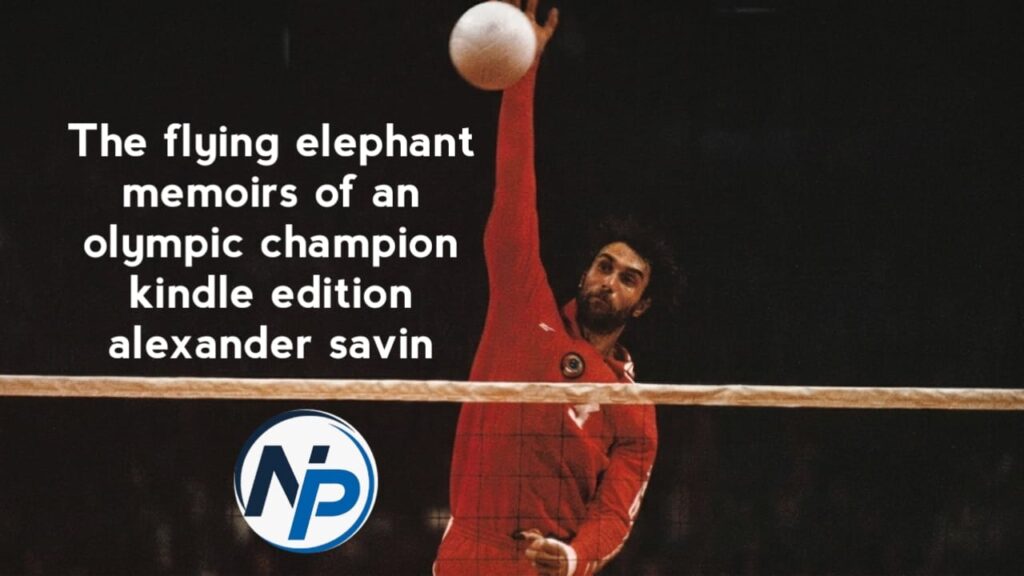
The Flying Elephant: Memoirs of an Olympic Champion Kindle Edition – Alexander Savin
Some sports books are about results. Others try to explain the person behind those results.
The Flying Elephant: Memoirs of an Olympic Champion belongs to the second group. It is the memoir of Alexander Savin, a Soviet volleyball player whose career included two Olympic medals: silver at the 1976 Montreal Games and gold at the 1980 Moscow Olympics.
That makes the book interesting for more than volleyball fans. Savin competed during a major period in Olympic and Soviet sports history. His story connects elite volleyball with training, team life, international competition, and the pressure of representing the Soviet Union.
The English Kindle edition gives modern readers a way to explore that story in digital form. Current listings describe a 514-page edition with more than 240 photographs, although readers should check the current retailer listing for the latest edition details.
Who Was Alexander Savin?
Alexander Savin was a Soviet volleyball player who competed as a middle blocker. He became one of the important players in the Soviet national team during the 1970s and 1980s.
His Olympic record is easy to remember.
In 1976, the Soviet Union reached the men’s volleyball final in Montreal. Poland won the five-set final, leaving Savin and the Soviet team with silver.
Four years later, Savin had another Olympic opportunity.
At the 1980 Moscow Games, the Soviet team won the men’s volleyball gold medal. Savin was part of that championship squad.
So his Olympic story includes both sides of elite sport: losing a final and later winning Olympic gold.
That makes his memoir more interesting than a simple list of medals.
What Is The Flying Elephant About?
The book looks at Savin’s life and career through his own perspective.
The main subject is volleyball, but the story is also about the environment around the sport. Current descriptions of the English edition point to training, competitions, teammates, coaches, Olympic experiences, and the history of Soviet volleyball.
This is important because an athlete’s career cannot be understood through medals alone.
A result tells us who won.
A memoir can help explain what happened before the result.
For Savin, that means looking at the years spent preparing for international competition and the people who shared that experience with him.
The book is therefore likely to appeal most to readers who want the story behind an Olympic career rather than a short career summary.
Why Is the Book Called “The Flying Elephant”?
The title is unusual, and that is part of its appeal.
Savin was known as a powerful volleyball player, but contemporary descriptions also highlighted his ability to jump and move despite his size. A 1978 description quoted in a U.S. Congressional Record article called attention to his remarkable ability as a leaper.
That helps explain the contrast in the title.
The elephant suggests size and strength.
The flying part suggests movement, jumping, and athletic ability.
Together, the words create a memorable picture of a large volleyball player who could still get high above the net.
It is also a fitting name for a sports memoir because it captures something unusual about Savin’s playing style without reducing his career to statistics.
Alexander Savin’s Olympic Story
The two Olympic Games in Savin’s career provide an important timeline for understanding his story.
Montreal 1976
The 1976 Montreal Olympics were Savin’s first Olympic Games.
The Soviet team reached the men’s final against Poland. The match went to five sets, but Poland won and took the gold medal. The Soviet Union finished with silver. Savin was part of that Soviet team.
A silver medal is a major achievement, but losing an Olympic final can leave a very different memory from winning one.
That experience became part of Savin’s Olympic journey.
Moscow 1980
The next Olympics changed the outcome.
The 1980 Games were held in Moscow, and Savin was part of the Soviet team that won the gold medal.
The Games also took place during a tense period of the Cold War. Many countries, including the United States, did not participate because of the boycott. That gave the Moscow Olympics a political background that was unusual even for an event already closely connected with national identity.
For Savin, however, the sporting result was historic.
He had gone from Olympic silver in Montreal to Olympic champion in Moscow.
Why His Career Matters in Volleyball History
Savin’s importance is not based on one Olympic medal.
He was part of a Soviet volleyball program that was one of the major powers in international competition during his era. His career also included major international tournaments outside the Olympics.
That wider background matters when reading a memoir.
The Olympic Games may provide the most familiar part of the story, but an athlete does not become an Olympic champion during one tournament. The development happens through years of club and international competition.
Savin played for CSKA Moscow and represented the Soviet national team. His career placed him inside one of the strongest volleyball systems of his time.
That makes the memoir useful not only as a personal story but also as a window into an older period of international volleyball.
What Makes the Memoir Different?
A normal sports biography may tell you when an athlete was born, which teams they played for, and which medals they won.
A memoir has a different advantage.
It is built around the athlete’s own memories and perspective.
That matters in Savin’s case because his career happened decades ago. Much of that period is now history. A personal account can add details and viewpoints that are difficult to get from medal tables and match results alone.
The English edition is also described as containing more than 240 photographs. Reports say the images include archival and family material connected with Savin and the wider volleyball story.
For readers interested in sports history, those photographs may be one of the book’s strongest features.
The Kindle Edition
The Kindle version is useful for readers who prefer digital books.
Current listings describe the English edition as approximately 514 pages and include more than 240 photographs.
Because the book contains a large amount of visual material, the reading experience may be different from that of a simple text-only sports biography.
A Kindle edition also makes a long book easier to carry. Readers can use a Kindle device or a compatible reading app, depending on the edition and platform.
One point is worth keeping in mind: digital book information can change by country and marketplace. Price, availability, subscription access, and some Kindle features may not be identical everywhere. Checking the current listing before purchasing is the safest option.
What Readers May Find Most Interesting
The strongest appeal of the book is its combination of sport and history.
Readers can approach it from several angles.
1. Olympic history
Savin experienced two very different Olympic outcomes. He lost a final in 1976 and won gold in 1980.
2. Soviet volleyball
His career took place when Soviet volleyball was a major force in international competition.
3. Athlete experience
The memoir gives attention to the life of an elite athlete rather than only recording match results.
4. Historical photographs
The reported 240-plus photographs add a visual side to the story.
5. A different sporting era
Modern readers can use the memoir to understand how international volleyball looked during the Soviet era.
These points make the book relevant even if someone is not a serious volleyball follower.
Is It Worth Reading?
That depends on what you want from a sports book.
If you want a short biography with only the main achievements, a 514-page memoir may feel long.
If you enjoy detailed athlete stories and sports history, the length can be a benefit.
The book is particularly interesting for readers who want to understand the person behind an Olympic medal. Savin’s career includes a clear story arc: an Olympic silver medal in Montreal, followed by Olympic gold in Moscow.
It also has value as a record of a volleyball generation that is now part of sporting history.
For that reason, the book should be viewed as more than a motivational sports story. Its historical setting is one of its strongest features.
Who Should Read The Flying Elephant?
The memoir may be a good choice for:
- Volleyball fans
- Olympic history readers
- Sports biography readers
- Coaches and players
- Readers interested in Soviet sports
- People who enjoy first-person career stories
- Anyone curious about the 1980 Moscow Olympics
You do not need to know every volleyball rule to follow the larger story.
The important ideas are easy to understand: competition, preparation, teamwork, pressure, disappointment, and achievement.
Final Review
The Flying Elephant: Memoirs of an Olympic Champion offers something that a medal table cannot.
It gives readers a way to look at Alexander Savin’s career as a lived experience rather than a collection of results.
His Olympic record already tells an impressive story. He won silver at Montreal in 1976 and gold at Moscow in 1980.
But the historical setting adds another layer.
Savin competed during the strong years of Soviet volleyball and at a time when Olympic sport was closely connected with the wider Cold War world. His memoir therefore has value for both sports readers and people interested in that period of history.
The reported English Kindle edition, with around 514 pages and more than 240 photographs, is also substantial enough for readers who want a detailed account rather than a quick overview.
If your interest is volleyball, Olympic history, or the personal side of elite competition, The Flying Elephant is worth investigating.
Frequently Asked Questions
Who is Alexander Savin?
Alexander Savin is a former Soviet volleyball player and Olympic champion. He won silver at the 1976 Montreal Olympics and gold at the 1980 Moscow Games.
What sport did Alexander Savin play?
He played volleyball, competing as a middle blocker for the Soviet Union.
What medals did Savin win at the Olympics?
He won a silver medal in 1976 and a gold medal in 1980.
What is The Flying Elephant about?
It is a memoir centered on Savin’s career in elite volleyball, including his experiences around international competition and the Olympic Games.
Is The Flying Elephant available as a Kindle edition?
Yes. Current sources describe an English Kindle edition. Availability and pricing can vary by Amazon marketplace, so readers should check their local listing.
How long is the Kindle edition?
Current listings report approximately 514 pages.
Does the book contain photographs?
Current descriptions report more than 240 photographs, including archival and family material.
Why is the title called The Flying Elephant?
The title reflects the contrast between Savin’s powerful physical presence and his ability to jump and move effectively on the volleyball court. Contemporary descriptions of his playing ability also emphasized his unusual jumping skill.
Is the book only for volleyball fans?
No. Readers interested in Olympic history, sports biographies, Soviet-era sport, or athlete experiences may also find it useful.
Is the Kindle edition worth reading?
For readers interested in Savin’s career and the history of Soviet volleyball, the detailed format and photographic material make it a strong option. Readers who prefer short biographies may want something less extensive.
Visit for more information